Walk into Qua O La on a weeknight and the first thing you notice is a cable car bell mounted near the bar, the kind you'd expect on Powell Street, not bolted to the wall of a wine bar on Grant Avenue. Owner Sal Annuzzi found it at a vintage store and installed it for birthdays, or for last call. Head toward the back and there's a Photomatica photo booth, a chalk map of the Adriatic coast updated daily with the wine flight, and a bathroom mirror scrawled with an Italian phrase that translates, loosely, to a compliment you wouldn't put on a greeting card. It reads like a new bar trying hard to feel lived-in.
But Qua O La isn't inventing a personality for North Beach. It's finishing a sentence the neighborhood started telling more than 175 years ago and then, for the better part of a decade, forgot how to end.
The Cuisine That Was Never Really New Here
North Beach wears its Italian identity so completely that it's easy to miss the other thread running underneath it. Tadich Grill, the oldest continuously operating restaurant in San Francisco, was founded in 1849 by three Croatian immigrants who started with a coffee tent on the waterfront. Original Joe's, the red-sauce institution that still overlooks Washington Square Park, traces back to a Croatian immigrant named Tony Rodin. The Slavonic Mutual and Benevolent Society, one of the first Croatian cultural organizations in the country, was founded in the city in 1857. That lineage continues today as the Croatian American Cultural Center, now based on Alemany, 169 years after the original society's founding.
None of that history ever left San Francisco. What left was the ability to sit down and order it. Albona Ristorante Istriana, a 30-year fixture on Francisco Street known for Istrian-style cooking, closed at the end of 2018. After that, there was nowhere in North Beach dedicated to Croatian food and wine. Not a bad table, not an inconsistent one. None.
That's the gap Qua O La opened into this April at 1318 Grant Ave, on one of the block's busiest stretches of bars. The menu leans into that dual identity on purpose: cicchetti with mascarpone and fig jam sitting next to ćevapi, the grilled sausage central to Balkan cooking, and burek, the phyllo pastry that shows up at every Croatian table from Zagreb to the Excelsior, where Annuzzi actually grew up before marrying into a North Beach family with roots in Istria. The wine list favors small, often family-run producers from Croatia and Italy in roughly equal measure. It is, by design, less a new concept than a restoration project, and the neighborhood noticed fast. Within a month of opening, it was already turning up on Infatuation's list of North Beach spots worth starting a night at, described as a mellow entry point before a louder evening on the same block.
The Buildings Doing the Same Thing the Menus Are
Once you see the pattern at Qua O La, it shows up everywhere else this year's North Beach openings have happened.
Equal Parts, the newest kitchen getting attention from local dining guides, didn't go looking for a blank lot. It moved into the old Spaghetti Factory Building on Green Street, a space with its own history already built into the walls, and let chef Melissa Perfit run a seafood-driven California menu inside it. A few blocks over, 15 Romolo, the long-running bar that's been a fixture of the neighborhood's late-night circuit, spent 18 months mid-renovation rather than closing for good, which tells you something about what North Beach's older buildings are worth to the people who run businesses in them.
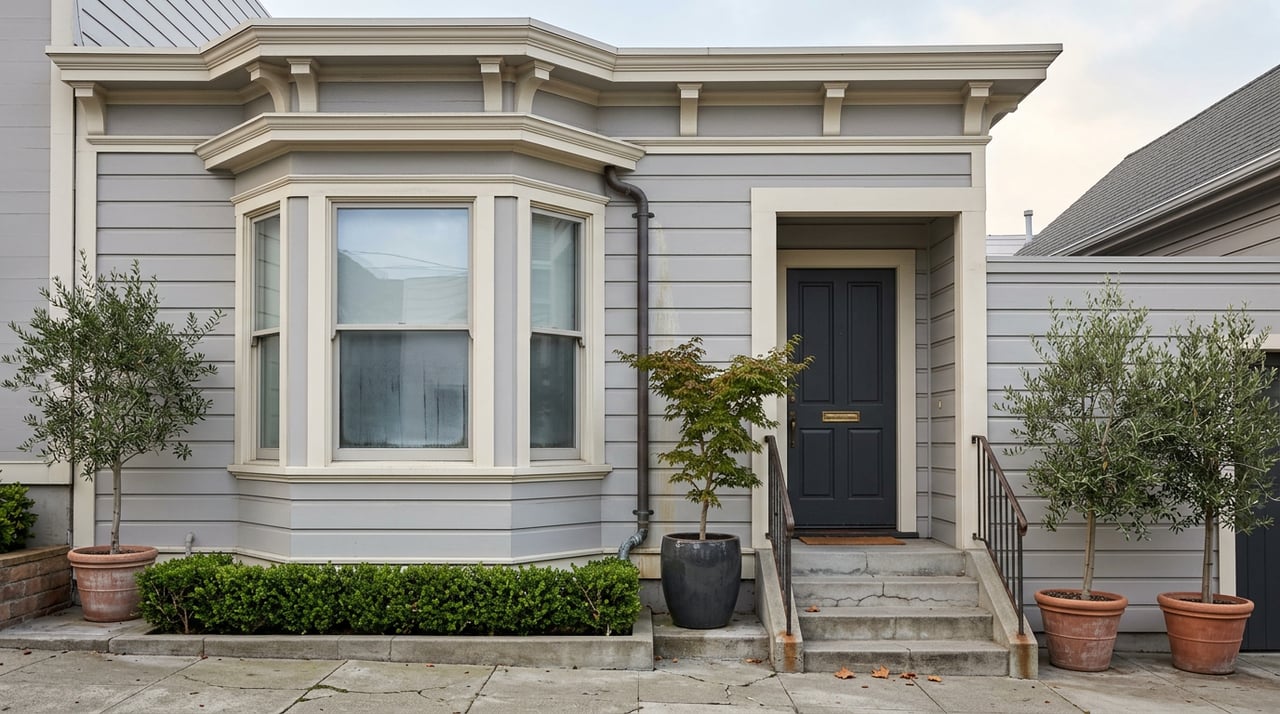
None of this is a coincidence of timing. North Beach is one of the few San Francisco neighborhoods where the physical stock, narrow Victorian and Edwardian storefronts, low-rise buildings with real history attached, makes renovation the default instead of the exception. When a business here gets new energy, it tends to arrive inside an old shell rather than replace it. That's a different growth pattern than the one you'd find in newer commercial corridors, and it's part of why walking down Grant or Columbus this year still feels like walking down Grant or Columbus, even with new names on the doors.
The Monthly Habit That Predates All of It
The clearest version of this pattern doesn't involve food at all. It's North Beach First Fridays, the self-guided art crawl that happens on the first Friday of every month and has quietly become one of the neighborhood's most reliable draws, though calling it new would be misleading. It works because it borrows credibility from places that were already fixtures.
Caffe Trieste, a genuine anchor of the neighborhood's Beat-era history, hosts live music on First Fridays. Past editions have included City Lights and Vesuvio hosting readings in Jack Kerouac Alley, steps from where Ginsberg and Kerouac themselves used to walk. Biordi Art Imports, the Italian ceramics shop on Columbus Avenue that's been in business since 1946 and was added to San Francisco's Legacy Business Registry a few years ago, opens its storefront for performances. Owner Deborah Baldini has described the monthly crawl as a reminder of what the neighborhood has always had, not an addition to it. Sweetie's Art Bar puts a new artist on the wall every month with live jazz outside. Club Fugazi, the historic theater whose current production is "Dear San Francisco," opens its doors on First Fridays so visitors can watch its acrobats train before the evening performance.
The venues change slightly month to month. The instinct behind it, using a night out to reintroduce people to businesses that have been here for decades, doesn't change at all.
One Loud Weekend That Runs Through the Same Institutions
If you wanted a single afternoon that captured how thoroughly North Beach's new energy runs through old civic infrastructure, this past August 15 was it. The Pizza, Bagel & Beer Festival returned to the San Francisco Italian Athletic Club for its fourth year, hosted by 13-time World Pizza Champion Tony Gemignani, and it grew this year rather than just repeating: a new live music stage went up in Washington Square Park with swing, jazz, and rockabilly acts running through the afternoon.
The vendor list read like a tour of Bay Area pizza and bagel culture: Tony's Pizza Napoletana, Capo's, Slice House, A16, Flour + Water Pizzeria, Square Pie Guys, PizzaLeah, Pizzeria da Laura, Boichik Bagels, The Laundromat, Dago Bagel, alongside Sierra Nevada, Fieldwork Brewing, and Lagunitas pouring beer. General admission ran $90 with four beer tickets included, and a $275 VIP tier added early entry and a private lounge inside the Italian Athletic Club itself.
What makes the festival worth mentioning here isn't the pizza. It's where the money goes. Proceeds benefited the Salesian Boys & Girls Club, the San Francisco Italian Athletic Club Foundation, Saints Peter & Paul School, Friends of Washington Square Park, Next Village, the John Arena Foundation, and the North Beach Business Association, the same organization that helps run First Fridays. A festival built around new vendors and a new stage still funnels its support straight into the neighborhood's oldest civic institutions, the school, the park, the athletic club that's hosted North Beach's Italian-American community for generations.
What This Actually Means If You Live Here
None of this is a story about North Beach becoming something else. It's a story about how carefully the neighborhood keeps reactivating what it already has. A wine bar built inside a years-long absence rather than a blank storefront. A restaurant chef working inside an older building instead of a new build. A monthly art walk that runs on the credibility of a longtime cafe and a ceramics shop that opened in 1946. A pizza festival whose growth this year showed up in Washington Square Park, with proceeds flowing to a parochial school and an athletic club that have anchored the neighborhood for far longer than the newest restaurants leaning on them.
If you're planning a night out this month, that's the version worth chasing: start at Qua O La for a wine flight, walk Grant Avenue on the first Friday for the gallery crawl and a reading in Kerouac Alley, and keep an eye on 15 Romolo for its reopening. You'll be doing exactly what the neighborhood has always asked of the people who live in it, which is to notice what's actually old before assuming it's new.
For those of you thinking further down the road about what it would mean to actually own a piece of a neighborhood built this way, on renovation instead of replacement, on institutions that outlast their tenants, The Weisinger Group has spent years watching how that history shows up in the buildings themselves. When you're ready to talk about it, schedule a consultation and we'll walk you through what it actually means to buy into a block like this one.